Chew On This
The following summarizes material presented in a virtual CEO Forum on October 14, 2026. You can watch the recording here.
Recently, I had the pleasure of connecting with many of our donors and supporters during a virtual forum, entitled “New Data. New Insights. Our Region’s Hunger Crisis. What the 2026 Virginia Hunger Study Reveals About Local Hunger.”
For many years, we’ve relied on a range of data sources to understand hunger across the Blue Ridge region. Those sources have helped guide our work, but they have also left important questions unanswered.
Today, we have a clearer picture than ever before, thanks to the newly released Virginia Hunger Study.
That study was funded by Virginia’s seven regional food banks, including the Capital Area Food Bank. The Virginia Hunger Study, an extension of the 2026 Capital Area Food Bank-NORC Hunger Study, was commissioned through a partnership between the Federation of Virginia Food Banks, the Virginia Department of Social Services (VDSS), and No Kid Hungry Virginia. The survey was conducted by the independent nonpartisan research organization NORC at the University of Chicago with support from researchers at Virginia Tech, in partnership with the Federation of Virginia Food Banks, and the Virginia Department of Social Services.
This study provides the most precise look yet at the level of food insecurity in our region. The data is more reliable, and more current than surveys we’ve relied on in the past. (surveys conducted in May 2026).
The findings my colleagues and I presented during the forum are striking, but not surprising.
This study presents a reality we know is experienced by our partners and guests every day as we are witnessing the highest level of need we’ve seen in our 45-year history. We now have the data to back that up.

1 in 3 households
Here’s the bottom line: The study found that 1 in 3 (37%) households in our region is food insecure. 1 in 3 (35%) children under the age of 18 in our region is food insecure. And, 1 in 3 households that are food insecure includes at least one older adult over the age of 60.
Some of the most powerful findings in the study came from parents themselves. Many reported skipping meals so their children would have enough to eat. As a parent, I find those sacrifices both inspiring and heartbreaking. No parent should have to go hungry to feed their child.


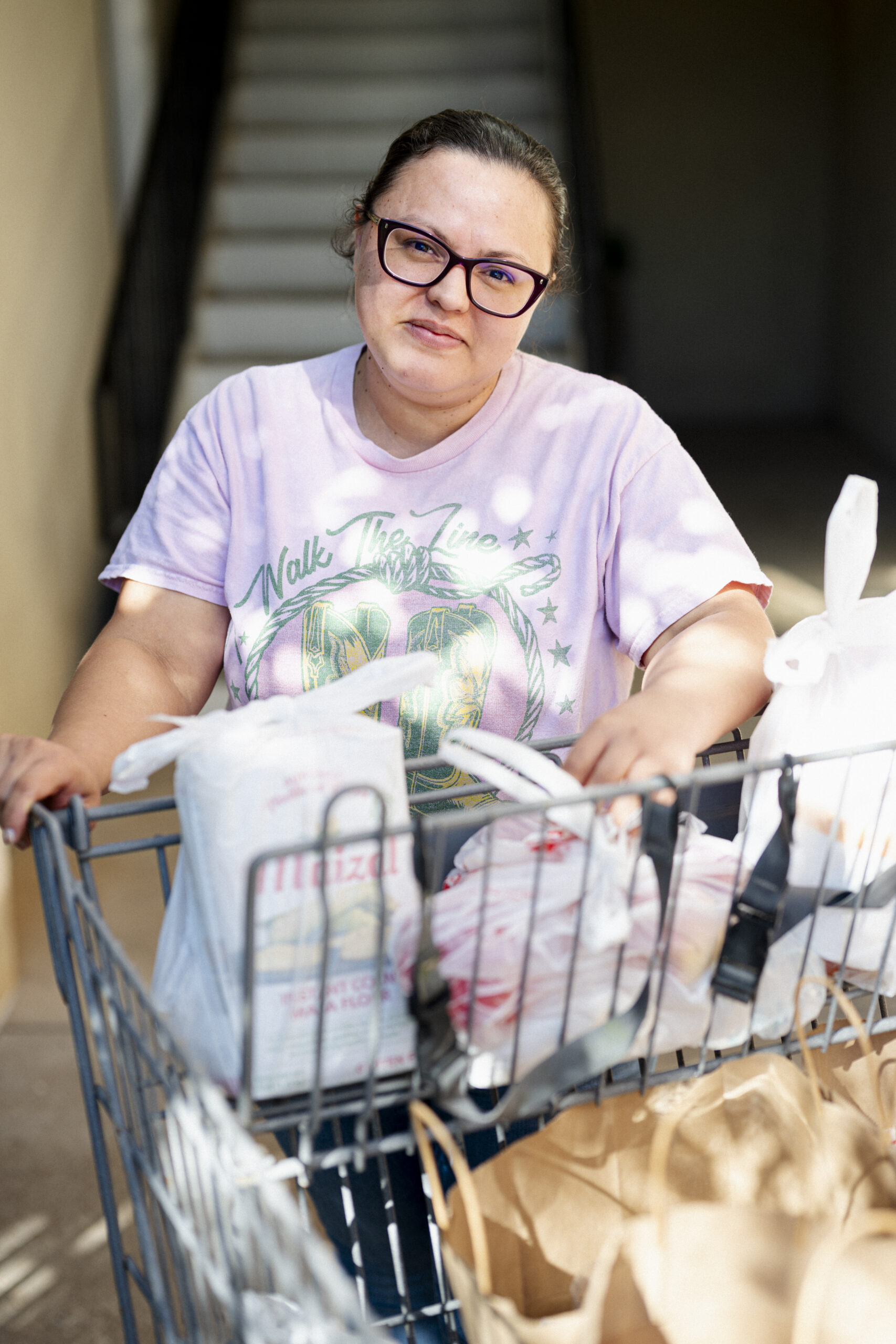
The growing cost of getting by
For most of you reading this, you probably have a pretty good idea of what is causing the high rate of food insecurity across our region. Those root causes are the same for many across the country. We are all feeling it. But inflation is hitting families who are food-insecure the hardest.
Well over 40% of study participants—food secure and insecure —mentioned that their financial situation had worsened during the past year. When asked why, cost of living was mentioned most often, and that included the cost of food, housing, transportation, and gas. Not surprising if you keep in mind that grocery prices have increased 33% since the beginning of 2019. And here’s yet another fact to keep in mind: 61% of the food-insecure households are working one or more jobs.
Short-term solutions, long-term consequences
Faced with impossible trade-offs, many of our neighbors are turning to whatever resources they have available to cover basic needs. While these coping strategies may provide temporary relief, they can create lasting financial challenges.
For example, participants in the study told us they are increasingly relying on savings to pay for everyday expenses, withdrawing money from retirement accounts to buy groceries, or stopping retirement contributions altogether. Some are also using “buy now, pay later” services for food purchases, a financing tool once more commonly associated with major household expenses such as appliances or home repairs.
These coping strategies help families get through the current moment, but they can also cause long-term financial instability, making it harder to build savings, prepare for retirement, and pass financial security on to future generations.
Preparing for what’s ahead
I strongly believe that it is the Food Bank’s responsibility to identify patterns early and act before pressure becomes crisis. That’s what this study allows us to do.
I’m still worried. Last year’s HR1 legislation is designed to reduce federal SNAP spending by approximately $187 billion over the next decade. We are concerned that SNAP and other public benefit cuts are coming at the same time as the increased need for food assistance.
By anticipating future needs now, we are better prepared to help anyone who needs it. The charitable food system is the first line of defense when households experience SNAP cuts. Participants in the study who are enrolled in SNAP confirmed that their first resort if their benefits are cut would be to seek out local food pantries.
Meeting the moment, together
So, is it all bad news?
Certainly not. The findings in this report may be sobering, but they are not the whole story.
Every day, I see the strength of our community in action. I see neighbors helping neighbors, partners working tirelessly, volunteers giving their time, and donors stepping up to ensure families have access to nutritious food. That spirit of generosity and shared responsibility is what makes our work possible.
We find ourselves in a new era of sustained and heightened need. As your Food Bank, we remain committed to being there for our community, no matter what challenges lie ahead. We are here for the long haul.
Together, we can ensure our neighbors not only have enough food, but enough nutritious food to support their health, well-being, and future. After all, a full plate is a bridge to a brighter tomorrow.
Get involved
There are many ways to get involved, including advocating for strong public policies, volunteering, and giving. And there’s much work to be done. I have never been more confident that we, together, can overcome any obstacle. I see resilience every day, I see true partnership every day, and I experience care in action, every day.
We are a community that refuses to accept hunger as inevitable. That’s why, even in uncertain times, I am so hopeful for the future.
Thank you for your support. It’s needed now more than ever.